Happ Coffee Roasters
Peru Women's Group Washed
Peru Women's Group Washed
Couldn't load pickup availability
Nestled in the communities of Mendosayoc and Juyhuay in the Lacco Valley, where the Andes gradually descend into the Amazon rainforest, a story of resilience, learning, and leadership is unfolding. More than coffee, this lot represents a moment of transition, where technical innovation, cultural heritage, and collective organization converge. It reflects the legacy of Quechua farming traditions while supporting a more equitable distribution of value at origin. Each cup tells a story of biocultural diversity, shared knowledge, and the women of Mendosayoc and Juyhuay who are shaping the future of their communities through coffee.
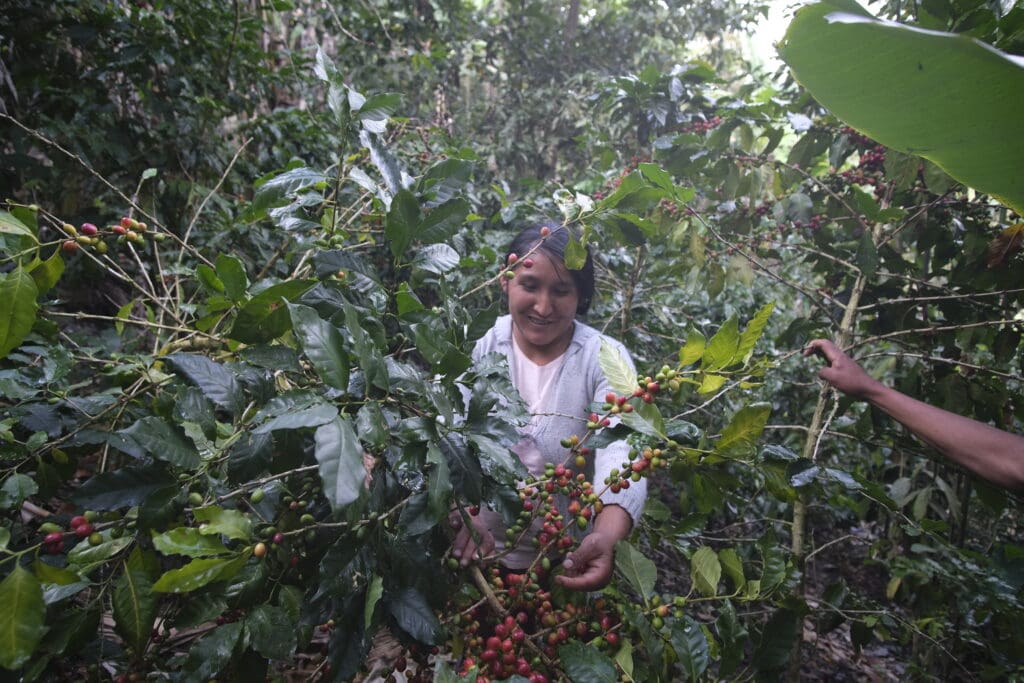
This lot comes from the Women Producers Group of Orígenes, a collective formed in 2022 to strengthen women’s participation, technical leadership, and economic visibility within the cooperative. Representing 53 associated women from several member communities, six producers came together to craft this lot. Their farms span approximately 9.5 hectares and are managed within sustainable agroforestry systems that integrate coffee cultivation with the rich biodiversity of the Tropical Andes. The region forms part of the Manu Biosphere Reserve, one of the world’s most biodiverse ecosystems, where high altitudes, abundant rainfall, and cool temperatures create ideal conditions for specialty coffee production.
This coffee is processed as a traditional washed lot. After pulping, the coffee undergoes a 24-hour wet fermentation in ceramic tanks, with floaters and defects removed before washing. Drying is carried out primarily on raised beds, taking between 6 and 12 days depending on weather conditions.
Supported by the Andean Alliance for Sustainable Development, the cooperative has prioritized sustainability throughout the value chain. Demonstration farms across the region showcase agroforestry techniques that promote biodiversity conservation, efficient water use, and increased organic production. These efforts highlight coffee potential as a sustainable land-use crop while protecting the ecological richness of the Tropical Andes. Participation in differentiated lots has expanded women’s influence over production decisions and access to premiums, while the collaborative learning model has helped spread best practices among members.
https://www.allycoffee.com/coffees/womens-group-blend-washed/